


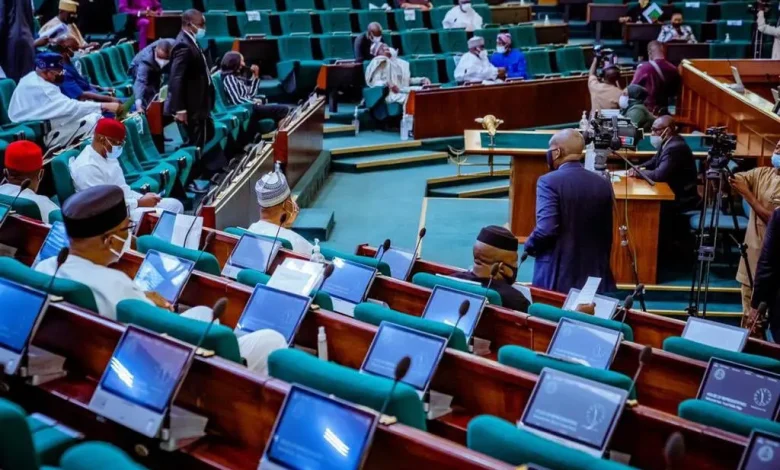
The House of Representatives will on December 10 and 11 vote on key proposals in the ongoing review of the 1999 Constitution, including the establishment of state police, special seats for women in parliament, creation of new states and local government autonomy.
Deputy Speaker Benjamin Okezie Kalu announced the timetable at plenary, noting that debates on the constitution amendment bills will hold today and tomorrow ahead of next week’s vote. Kalu, who chairs the House Committee on Constitution Review, urged members to be present for the sessions.

He recently told the House that the committee had completed the technical work required at this stage and is preparing the final set of harmonised documents for consideration.

A total of 87 bills seeking to amend various sections of the Constitution were initially introduced in the House. They cover electoral and judicial reforms, state police and fiscal matters. However, after zonal public hearings, a national public hearing in Abuja, stakeholder consultations and harmonisation with the Senate Committee on Constitution Review, the number of items heading for a vote has been trimmed to about 45.

On Monday, November 24, the House and Senate committees on constitution review held a joint retreat with speakers of state assemblies in Abuja as the amendment process entered a decisive phase.

Addressing the speakers, Kalu and Deputy Senate President Barau Jibrin said the fate of the alteration bills now rests largely with state parliaments once the National Assembly concludes its work. Kalu said the retreat marked the final stage before voting begins.
Key proposed amendments
Key proposed amendments include the creation of state police, special seats for women in parliament, independent candidacy, enhanced roles for traditional rulers and powers for the National Assembly and state assemblies to summon the president and governors on security matters.
One bill seeks to amend the Constitution to allow independent candidacy in presidential, governorship, National Assembly, state assembly and local government elections. The proposal would alter Sections 7, 65, 106, 131, 177, 221 and 228 to permit individuals to contest without political party sponsorship.
Another bill proposes to amend Sections 197, 201 and 202 to transfer the conduct of local government elections from state independent electoral commissions to the Independent National Electoral Commission (INEC).
Lawmakers are also considering a bill to preserve the election of a president or governor whose running mate is later found to have a qualification deficiency. The amendment to Sections 142 and 187 seeks to prevent the annulment of elections solely because of issues with a deputy’s eligibility.
Similarly, a bill proposes that all appeals arising from election petition tribunals be concluded before the swearing-in of elected officials. Its supporters say settling disputes before inauguration will strengthen legitimacy, prevent governance disruptions and enhance public trust.
Another proposed amendment seeks to empower clerks of the National Assembly and state assemblies, rather than the president or governors, to proclaim new assemblies. The amendment to Sections 64 and 105 is aimed at reinforcing legislative independence.
A bill that has drawn significant public interest is the proposal to create specific seats for women in the National Assembly and state assemblies by amending Sections 48 and 49.
Another major proposal is the establishment of state police through amendments to Sections 197, 214 and 215, which would move policing from the Exclusive Legislative List to the Concurrent List. Supporters argue that decentralised policing is critical to addressing mounting security challenges that have stretched the federal police force.
The recent surge in insecurity across the country has given the bill fresh momentum, with both southern and northern governors agreeing in separate meetings that the time is right to implement state police.
Once voting is concluded, approved bills will be transmitted to the 36 state assemblies for concurrence. Two-thirds of the states — at least 24 — must approve each amendment before it is sent to the president for assent. Any bill that fails to secure the required state-level approvals automatically lapses.
Daily Trust