

As the 2027 governorship election draws near, the familiar refrain of“Yewa’s turn” has once again echoed across Ogun State’s political landscape. Yet, with an increasing number of aspirants from the zone and the emergence of strong contenders from other senatorial districts, the question remains whether Ogun West can finally break the over 50-year jinx of producing a governor and occupy the Oke-Mosan seat of power, GBENGA AKINFENWA reports.
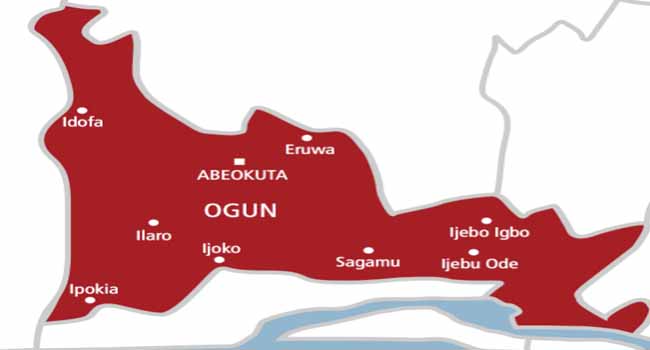
Of the many permutations that may determine who succeeds Governor Dapo Abiodun in 2027, the most debated is the long-standing agitation by the Ogun West senatorial district to produce the state’s chief executive. The zone remains the only senatorial district yet to produce a governor since the state’s creation, despite repeated references to a gentleman’s zoning arrangement among the political elite over the last five decades.

While the agitation appears to be gaining momentum ahead of the next election, political observers say familiar challenges are already resurfacing, chief among them internal rivalry, the inability of political actors from the zone to speak with one voice, and the influence of power brokers from Ogun Central and Ogun East who often exploit divisions within the district.

Currently, no fewer than five governorship aspirants from Ogun West have signalled interest in succeeding Abiodun. At the same time, influential politicians from other zones are positioning themselves to take advantage of what analysts describe as the “unbridled ambitions” and fragmentation among aspirants from the Yewa axis.

The 2027 election, therefore, presents yet another opportunity for the district, popularly referred to as the Yewa zone, to break the long-standing jinx and lay claim to the governorship seat that has eluded it since the state’s creation more than 50 years ago.

Historically, Ogun West has come close on a few occasions but has repeatedly fallen short. Perhaps the closest it came was during the 2011 election cycle, when former President Olusegun Obasanjo, then a chieftain of the Peoples Democratic Party (PDP), supported the late military General Adetunji Olurin to emerge as the party’s governorship candidate.
That effort, however, collapsed under the weight of internal divisions within the zone.
At the time, the then governor, Gbenga Daniel, was determined to install Gboyega Nasir Isiaka as his successor. Obasanjo, on the other hand, backed Olurin. The disagreement forced Daniel’s camp and its candidate, Isiaka, to defect to the People’s Party of Nigeria (PPN).
The resulting political realignment not only fractured the then-ruling PDP but also divided the Yewa axis between two candidates. Loyalists of Daniel moved en masse to the PPN, while others remained in the PDP, leaving the senatorial district deeply split during the election.
Political analysts later described the situation as a case of “scattered votes,” as the inability of the district to rally behind a common candidate weakened its chances and paved the way for another zone to seize the opportunity.
The pendulum eventually swung back to Ogun Central, which produced Ibikunle Amosun as governor in 2011. Amosun succeeded Daniel, who hails from Remo in Ogun East.
For many observers, the episode reinforced a familiar proverb: “When two brothers fight, a stranger inherits their father’s land.”
Over the years, politicians from Ogun West have often faced ridicule from their counterparts in other zones for repeatedly pushing the
“Yewal’okan” narrative without translating it into electoral victory. During election seasons, the slogan is frequently mocked with the phrase: “Yewal’okan, Ijebu lo ma se,” loosely interpreted to mean that “although it may be Yewa’s turn, Ijebu (another zone) will ultimately take the office”.
One explanation often cited for this recurring outcome is what some observers describe as the “lack of cohesion” among political actors from the district.
Unlike the relatively homogeneous ethnic blocs in other parts of the state, Ogun West is a diverse region comprising the Yewa, Awori, Egun, Ketu, Ohori and Anago groups. This diversity has often translated into competing political interests and fragmented alliances, making it difficult for the district to rally behind a single agenda or candidate.
Consequently, politicians from the zone have often found themselves drawn into broader political calculations, sometimes serving as pawns in the complex power struggles that define Ogun State politics.
A review of the state’s political history underscores the district’s exclusion from the governorship seat.
The first civilian governor of Ogun State, the late Bisi Onabanjo, emerged from Ogun East after the 1979 election during the Second Republic. In the aborted Third Republic, Segun Osoba from Ogun Central won the 1993 governorship election.
Osoba later returned as governor after winning the 1999 election at the dawn of the Fourth Republic, but lost the seat in 2003 to Daniel of Ogun East, who went on to serve two terms.
Amosun of Ogun Central assumed office in 2011 and governed until 2019, when Abiodun from Ogun East emerged as governor. Abiodun is expected to complete his second term in 2027.
Against this backdrop, political analysts often argue that Ogun State remains one of the few states where the informal zoning arrangement among senatorial districts has largely been ignored since the return to democratic rule in 1999.
As the next election approaches, however, Ogun West once again sees an opening to realise its long-standing ambition.
Within the ruling All Progressives Congress (APC) alone, several aspirants from the zone have already indicated interest. Among them is the Chairman of the Senate Committee on Appropriation, Solomon Olamilekan Adeola, popularly known as Yayi.
Others include the Deputy Governor, Noimot Salako-Oyedele; House of Representatives member representing Yewa North/Imeko-Afon Federal Constituency, Gboyega Nasir Isiaka; former deputy governorship candidate of the PDP in the 2023 election, Adekunle Akinlade, who has since defected to the APC; and the Chairman of the House Committee on Agricultural Institutions and Colleges, Abiodun Isiaq Akinlade, representing Yewa South/Ipokia Federal Constituency.
Yet, analysts say the greatest threat to the zone’s ambition may not only be the multiplicity of aspirants but also the emergence of formidable contenders from Ogun Central and Ogun East.
Already, a former deputy governor of the Central Bank of Nigeria, Tunde Lemo, and former senator Iyabo Obasanjo-Bello, daughter of former President Obasanjo, have declared interest in the race from Ogun Central.
There are also speculations about possible entries by prominent federal figures such as Wale Edun, Bosun Tijani, and former Speaker of the House of Representatives Dimeji Bankole, although none has formally joined the contest.
Another variable is the strength of opposition candidates. Though the opposition parties are yet to unveil their aspirants, there are indications that Ladi Adebutu, the PDP’s candidate in the 2023 election from Ogun East, may return to the race.
From current political calculations, analysts say Adeola appears to possess the financial strength, political network and grassroots appeal that could potentially help Ogun West break the jinx. However, opposition to his candidacy, both within and outside the APC, may yet complicate his path, creating openings for aspirants from other districts.
Observers also warn that the familiar pattern of internal division within the Yewa axis could once again undermine the agitation if stakeholders fail to unite behind a single candidate.
Adding another dimension to the unfolding contest is the re-entry of Obasanjo-Bello into the political arena. Although some political observers initially dismissed her chances after years away from active politics, party insiders suggest that her emergence may have the backing of influential figures within the state who feel sidelined by the current administration.
Some analysts believe her candidacy could reshape calculations within the ruling party, potentially disrupting the political permutations being advanced by both the state government and the national leadership ahead of the 2027 polls.
Indeed, sources within the state suggest that Obasanjo-Bello’s entry into the race may also be aimed at confronting Senator Solomon Olamilekan Adeola, whom many contenders within and outside the zone have been reluctant to challenge directly.
Obasanjo-Bello did not mince words in expressing her discontent with Senator Adeola, insisting that the former Lagos lawmaker could not build his political career in the State of Excellence only to relocate to Ogun State in pursuit of the governorship.
Her message was unmistakable: the Gateway State has enough competent hands and capable minds to produce its own governor. Yet, Adeola appears far from an ordinary contender. He is widely believed to enjoy the backing of the presidency, even as it remains unclear whether the incumbent governor is favourably disposed to his ambition.
Beyond the political intrigues, however, many stakeholders insist that the success of the Ogun West agenda will depend largely on unity among its political elite.
Recently, while addressing professionals under the aegis of the Ogun West Professionals, Senate Leader, Opeyemi Bamidele, urged political and professional leaders from the zone to set aside personal ambitions and embrace collective purpose if they truly desire to produce the next governor.
Describing himself as a student of history and a stakeholder in Nigeria’s democratic process, Bamidele said Ogun State presents a unique case of political imbalance, in which a section of the state has consistently been excluded from top leadership positions.
According to him, although Ogun West has historically suffered from limited political influence, internal division within the district has equally weakened its governorship aspiration.
He said: “This internal fragmentation, which is largely absent in the other senatorial districts, has made elite consensus difficult to achieve in Ogun West. In contrast, other districts benefit from cohesive ethnic blocs that make unity and consensus easier.”
But the state’s deputy governor, Salako-Oyedele, retorted to Bamidele’s position. She expressed that the Senate Leader’s support for his long-standing ally, Senator Solomon Adeola, in the quest for Ogun West to produce the next governor should not be pursued.
Even so, the final outcome of the 2027 contest may depend on calculations by key power brokers within the state.
The influence of the incumbent governor, as well as that of political heavyweights such as former governors Segun Osoba, Gbenga Daniel and Ibikunle Amosun, is expected to play a significant role in shaping the succession battle.
Their alliances, endorsements and behind-the-scenes manoeuvres could prove decisive in determining whether the long-standing “Yewal’okan” agitation will finally translate into political reality, or remain, once again, an unfulfilled aspiration.
Credit: The Guardian