

Femi Ogbonnikan
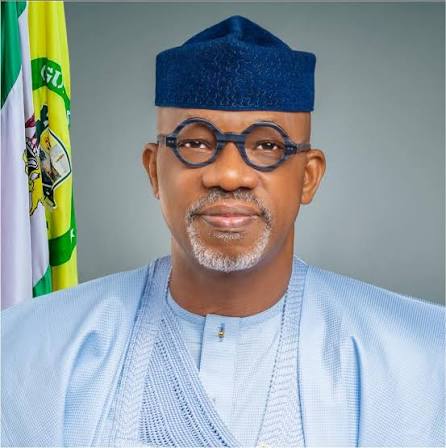
As political activities take shape ahead of the 2027 general election, Ogun State Governor, Prince Dapo Abiodun appears to be coasting toward a smooth end to his tenure, buoyed by expanding support across the state’s three senatorial districts.

In Ogun’s discerning political landscape, sustained voter backing requires far more than campaign rhetoric, it demands impactful socio-economic deliverables: Roads, jobs, security, industrial growth, and visible governance.

Eight years after first taking office in 2019, Abiodun is exiting with a portfolio of projects that cut across infrastructure, education, health, and industrialization.

Despite opposition skepticism surrounding the administration’s performance, the All Progressives Congress (APC) continues to build momentum through its expanding party base.

The question now is not whether the APC can retain Ogun, but who will inherit the structure Abiodun has built, and how that inheritance will be deployed to maintain Ogun’s relevance at the federal level?
Governor Abiodun’s political standing in Ogun East was further reinforced by a recent wave of support from key regional leaders.
Notably, he welcomed delegations from both the Otunba Gbenga Daniel (OGD) political family, led by Hon. Ladi Owodunni, and the Buruji Kashamu political group, led by Mrs. Damilola Talabi.
The formal reception at the Presidential Lodge in Abeokuta marked a decisive moment in Ogun State’s political realignments.
For decades, Ogun East politics has been defined by rival camps. The OGD structure dominated the Remo and Ijebu axis through two terms as governor and later as Senator.
The Kashamu group, though later in emergence, built a formidable grassroots machine in Ijebu North, Ijebu East, and parts of Odogbolu before the late senator’s death. That both structures are now publicly aligning with Abiodun signals more than a defection. It signals the end of a 20-year cold war in Ogun East APC politics.
Addressing the gathering, Governor Abiodun commended the leaders and supporters for choosing the path of unity, inclusiveness, and collective progress. He emphasized that political actors who share common interests should speak with a unified voice during an election year rather than dissipate energy across competing political platforms.
The consolidation carries significant strategic weight in Ogun East. The arrival of the OGD network and the late Senator Buruji Kashamu’s loyalists bridges historical political divides within the district.
Aremo Tunde Adesanya, Senior Consultant on Political Matters to the Governor and a former coordinator for Otunba Gbenga Daniel in Odogbolu Local Government, formally reaffirmed the group’s commitment to the APC mainstream under Abiodun’s leadership. Similarly, stakeholder Oladipupo Owodunni dismissed reports of members supporting opposition candidates, unveiling “Operation 5 Direct”—a grassroots mobilization drive aimed at securing victories across all electoral levels.
“Operation 5 Direct” is telling.
It is not just a slogan. It is a ward-to-polling-unit structure designed to deliver 5 votes per party member, 5 polling units per ward, and 5 wards per local government.
In a state with 236 wards and 3,536 polling units, that kind of granular targeting matters. It is how elections are won when voter turnout is low and margins are tight. The decision of Ogun East APC leaders and stakeholders to endorse Governor Abiodun for the Upper Chamber reflects a growing consensus that the district stands to gain immense strategic leverage from his executive experience.
Having served two terms as chief executive, Abiodun offers Ogun East a seamless bridge between federal legislative policy and local execution. This is the core of the consolidation agenda: continuity of influence.
During his governorship, key infrastructure assets such as the Gateway International Airport in the Remo axis and critical transit corridors like the Ijebu-Ode–Epe Expressway were championed.
These are not state projects alone. They are federal projects with state facilitation. The airport, for instance, requires NCAA certification, federal aviation approvals, customs presence, and private sector concession agreements.
A former governor in the Senate understands the bureaucracy, the committees, and the budget lines to push.
An experienced executive in the Senate is uniquely positioned to attract federal funding, private sector concessions, and aviation incentives that solidify Ogun East as a commercial logistics hub. Ogun East is already the industrial corridor of the state. Agbara, Ota, and Mowe are in Ogun Central and West, but the Remo-Ijebu axis is becoming the aviation, port, and agro-processing corridor.
Furthermore, with major economic milestones on the horizon—including Ogun State’s prospective emergence as an oil-producing state and the progression of the proposed deep-sea port—having an experienced executive in the Senate ensures that federal policy, port concessions, and natural resource frameworks actively support local industrialization.
Oil-producing status means derivation funds, NDDC-type interventions, and federal environmental remediation. A deep-sea port means NIMASA, NPA, customs, and federal rail link approvals. These are not things a first-term senator learns on the job.
They require relationships built over 8 years of sitting with federal ministers, governors’ forum meetings, and NEC sessions. High-ranking legislative positions are often informed by prior governance credentials, and Abiodun’s established relationship with the presidency and federal executive ministries enhances the district’s ability to secure primary infrastructure projects, ecological intervention funds, and federal educational support across Ijebu and Remo communities.
Nigeria’s federal structure means no state develops in isolation. The states that get ahead are those with strong connectors in Abuja. Consider the last 8 years. Ogun benefited from federal support for the Lagos-Ibadan rail, the reconstruction of the Abeokuta-Sagamu expressway, and special economic zone approvals because the governor had direct access to the Villa. That access must not end with his tenure. Moving from state leadership directly into national lawmaking reduces governance friction. It establishes a unified developmental agenda where state projects in health, urban renewal, and transportation receive direct legislative reinforcement at the national level.
For example, the Ogun State Health Insurance Scheme can be scaled with federal BHCPF funds if there is a senator who sits on the Senate Health Committee and understands the state’s data. The urban renewal in Abeokuta and Ijebu-Ode can attract federal housing and ecological funds if there is a senator who can defend budget proposals at appropriation.
This is not about personal ambition. It is about institutional memory. When a state loses a governor with 8 years of federal relationships, and replaces him with a newcomer, there is a 2-3 year learning curve. Ogun cannot afford that in 2027, when competition for federal resources will be fiercer due to economic constraints.
Abiodun’s consolidation is not limited to Ogun East. In Ogun Central, the completion of the Abeokuta township roads and the Ogun Tech Hub has created a new class of urban voters who see government as service delivery.
In Ogun West, the ongoing work on the Atan-Lusada-Agbara road and the push for the establishment of the Federal University of Education, Ilaro, are tangible deliverables.
By aligning key political structures behind a shared vision, the ruling party strengthens its grassroots foundation across all three districts. This matters for 2027 because presidential elections are won at the margins. If APC can sweep Ogun with reduced intra-party friction, it frees up resources and political capital to fight in swing states like Kano, Rivers, and Benue. The consolidation also sends a message to investors. Political stability is an economic variable. When OGD and Kashamu camps sit with Abiodun, it tells manufacturers in Agbara and logistics companies in Remo that policy will not change abruptly in 2027. That certainty attracts FDI.
No consolidation is without friction. Critics argue that concentrating power within one individual risks creating a “godfather” structure that stifles new talent in Ogun East. Youth groups in Ijebu have asked: if Abiodun goes to Senate, who gets governor? Is Ogun West’s turn being delayed again? Opposition parties, especially the PDP, ADC and NDC, are also testing the unity. They argue that “Operation 5 Direct” is a top-down directive that does not address local grievances around unemployment and cost of living. These are fair questions. The answer from the APC camp is that 2027 is not the time for experiments. With Tinubu seeking re-election and the economy in transition, Ogun needs a steady hand that can negotiate with Abuja, not learn the ropes.
With major economic milestones advancing, the administration’s governance record continues to serve as its primary political capital. The Gateway Airport, the oil-producing status bid, the deep-sea port, and the agro-cargo terminals are not campaign promises. They are projects in motion that require federal follow-through.
By aligning OGD and Kashamu structures, Abiodun has solved the biggest problem in Ogun East politics: disunity.
By signaling a Senate run, he has solved the second problem: how to keep Ogun’s federal voice strong after 2027. The 2027 election in Ogun will therefore be a referendum on two things: continuity of development and effectiveness of state-federal linkage.
Voters will ask: who can finish the airport? Who can bring the port? Who can turn oil-producing status into jobs? If the APC presents a united front under the consolidation agenda, Ogun will enter 2027 not as a battleground, but as a base. If the opposition fragments, that base will only grow stronger.
Ultimately, the Abiodun consolidation agenda is about more than political arithmetic. It is about securing Ogun State’s future in a federal system where relationships, experience, and continuity determine how much a state gets from the centre. The next four years will be decisive for projects that cannot be completed within one political cycle. The Gateway International Airport needs federal aviation policy to become a true cargo hub.
The proposed deep-sea port needs legislative backing to unlock concession agreements and rail connectivity. The oil-producing status requires sustained lobbying at the National Assembly to ensure Ogun benefits from derivation and environmental funds. These are not tasks for political newcomers.
They require a leader who already understands the workings of Abuja, who has built trust with federal ministries, and who can translate state priorities into national policy. That is the argument being made in Ogun East today.
In sending an experienced executive to the Senate, the district is not just rewarding performance. It is investing in leverage. As 2027 approaches, Ogun voters will weigh sentiment against strategy. The emotional appeal of zoning and fresh faces will matter, but so will the practical question of who can deliver federal resources faster. In a tough economy, delivery will trump rhetoric. The consolidation around Abiodun suggests that APC stakeholders believe experience is the safest currency. Whether that gamble pays off will depend on how well the party translates this unity into votes, and how well that vote translates into development for the people of Ogun across all three senatorial districts. The campaign has started. The real test of consolidation begins now.
Ogbonnikan is a Senior Special Assistant (SSA) on Media to the Ogun State Governor