

By Mogaji Wole Arisekola.
We Nigerians sometimes bury the truth beneath too many words. At other times, we dismiss uncomfortable questions because the answers do not favour our political preferences.

We want a fair and equitable society, but building one requires honesty, consistency and a willingness to examine our own prejudices.

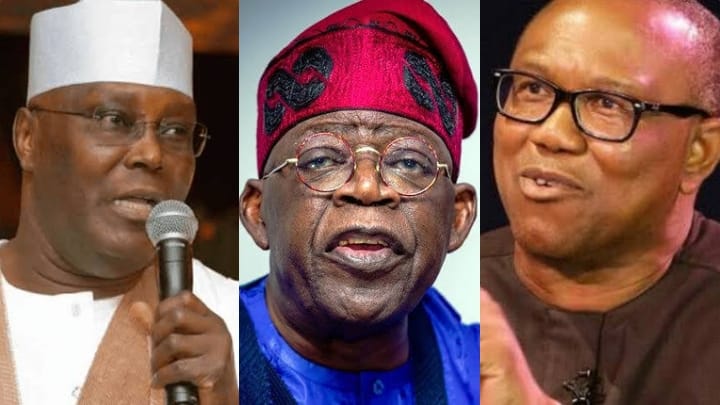
In Nigeria, politics, ethnicity and religion remain closely intertwined. However, we must be careful about sweeping generalisations. Not every Yoruba person supporting President Bola Tinubu does so because he is Yoruba. Not every Igbo person supporting Peter Obi is motivated by ethnic loyalty. Likewise, not every Northerner supporting Atiku Abubakar, or every Kano indigene supporting Rabiu Kwankwaso, is doing so because of their shared background.

People support politicians for different reasons: their records, policies, relationships, perceived competence or hopes for a better future. We should allow room for those differences.

The political landscape has also changed since the 2023 elections. Tinubu remains in the All Progressives Congress, while Atiku and Aminu Tambuwal have moved from the Peoples Democratic Party to the African Democratic Congress. Peter Obi, who contested the last presidential election under the Labour Party, and Kwankwaso, who contested under the New Nigeria Peoples Party, are now in the Nigeria Democratic Congress.
Yet, changing party names does not automatically change the habits of our politics. The struggle between personal ambition, regional interests and national responsibility remains.
Consider the events preceding the 2023 elections. Within the PDP, the controversy surrounding the chairmanship of Iyorchia Ayu, Atiku’s presidential ambition and Nyesom Wike’s objections exposed deep disagreements over zoning and the distribution of power.
Tambuwal’s withdrawal from the presidential primary in favour of Atiku also raised questions about political alliances and regional solidarity. Would he have made the same concession for Wike? That is a legitimate question, although shared regional identity alone cannot establish anyone’s motive.
Within the APC, the contest involving Tinubu, Yemi Osinbajo and Ahmad Lawan equally demonstrated that ethnicity does not explain every political disagreement. Tinubu and Osinbajo came from the same region, yet both pursued the presidential ticket.
The support of several Northern APC governors for a Southern presidential candidate and support of Asiwaju Bola Ahmed Tinubu for Late President Muhammadu Buhari deserves recognition. Their position showed that politicians can look beyond their immediate regional interests when they believe fairness demands it.
We should expect that same spirit from leaders across the country.
The debate over Goodluck Jonathan’s presidential ambition after the death of Umaru Musa Yar’Adua also revealed our inconsistent attitudes towards power rotation. Jonathan became President in 2010 and contested the elections in 2011 and 2015. His constitutional right to contest and the political argument over the PDP’s zoning arrangement were separate questions. Too often, Nigerians judged those questions according to the candidate they preferred.
The same inconsistency appears among supporters.
During the 2023 campaign, the reactions to Joke Silva’s support for Tinubu and Paul Okoye’s support for Obi illustrated how quickly political disagreement can become personal. Both had the right to support their preferred candidates. Neither should have been harassed for exercising that right.
If we defend political freedom only when it benefits our candidate, we are defending our interests rather than a principle.
Religion presents another challenge. Christian and Muslim leaders have every right to speak about justice, accountability and the welfare of citizens. However, organisations such as the Christian Association of Nigeria and the Nigerian Supreme Council for Islamic Affairs should exercise care when engaging in partisan politics.
Religious leadership should encourage informed choices and peaceful participation. It should never make followers feel that supporting a particular politician is a test of their faith.
As we look towards the 2027 elections, we must resist the temptation to excuse in our allies what we condemn in our opponents. Neither the North nor the South has a monopoly on patriotism, prejudice or political opportunism.
Nigeria will become what we collectively make of it. If we want fairness, we must practise it. If we want tolerance, we must extend it to people whose political choices differ from ours.
Let us remove the logs from our own eyes, apply the same standards to everyone, and learn to live and let live.
Mogaji Wole Arisekola writes from Ibadan.