

By Femi Ogbonnikan
Lagos may be Nigeria’s commercial capital, but Ogun is fast becoming its factory floor.
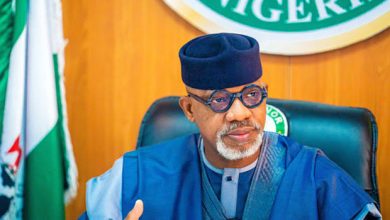
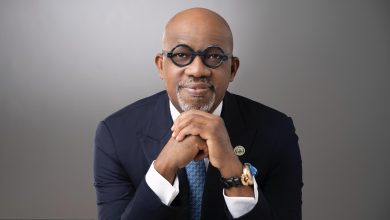
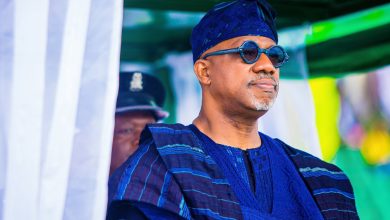
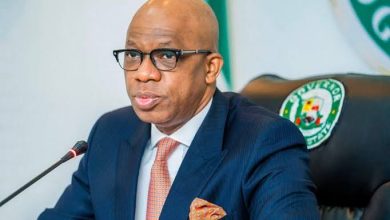
That transformation did not happen by accident. It is the product of the Governor, Prince Dapo Abiodun’s deliberate, private-sector-led blueprint — one that has turned the Gateway State from a corridor into an industrial powerhouse.

For decades, Ogun was described in the shadow of Lagos. It was the state you passed through on your way to somewhere else — a dormitory for Lagos workers, a transit point for goods, a place with potential that was always talked about but never fully unlocked.
Today, that narrative has changed fundamentally.
Investors no longer see Ogun as Lagos’s backyard. They see it as Nigeria’s most compelling industrial proposition: land, labour, location, and leadership.
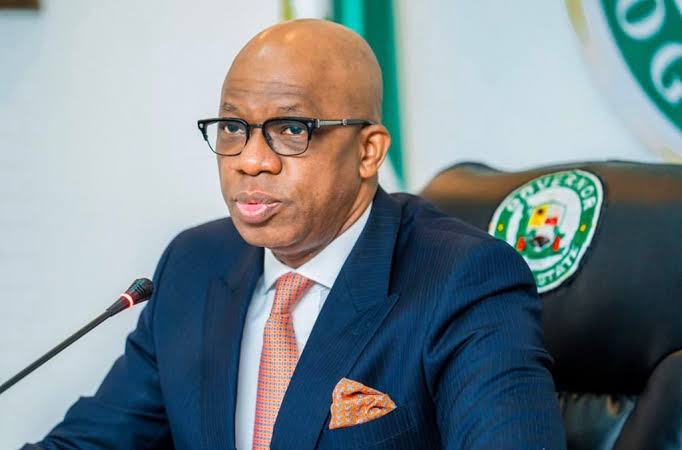
That leadership is the central question in the coming senatorial contest.
As Governor Abiodun prepares to move from Oke-Mosan to the Red Chamber, Abuja, the debate is not merely about who will represent Ogun East in the Senate. It is about whether Nigeria will take the lessons of Ogun’s industrial renaissance to Abuja — and whether the architect of that renaissance will be given a national platform to replicate it.

The proof is on the ground at the Sagamu Interchange, where the $1.8 billion Lee Group First Industrial Park has just been flagged off. Spanning 450 hectares, the park will host 29 manufacturing companies across food and beverages, footwear, personal care products, automation, industrial support and plastics recycling.
This is not a memorandum of understanding (MoU) gathering dust in a drawer. It is a physical, financed and fenced reality. Earth-moving equipment is on site. Investors have committed capital. The state has provided the enabling environment.

Beyond the headline investment, the project is projected to generate about 15,000 direct and indirect jobs for young Nigerians and skilled workers, while creating an interconnected ecosystem for small and medium-scale enterprises in logistics, warehousing, packaging, construction, catering, security and equipment maintenance.
That ecosystem matters, because industrial policy often fails in Nigeria when it focuses on the big factory and forgets the small supplier. Abiodun’s model is different. It understands that a single industrial park can sustain hundreds of local businesses — the truck driver who moves raw materials, the welder who fabricates fittings, the caterer who feeds workers, the security firm that guards the facility, the young graduate who learns automation on the job.
As Governor Abiodun, Lee Group Chairman Sheau Fung Lee, and the Minister of State for Industry, Trade and Investment, Senator John Enoh, all emphasised at the ceremony, global conglomerates do not commit billions of dollars by accident.
They commit because the numbers work, the environment is predictable, and the government keeps its word. Ogun’s rise reflects a deliberately cultivated, business-friendly environment that pairs proximity to Lagos and major markets with targeted infrastructure, helping to shift Nigeria from exporting raw materials to producing finished goods.
Investors ask three questions before they commit capital: can I get land without litigation? Can I get power and roads to move my goods? And will government policy remain stable after I invest? In Ogun under Abiodun, the answer to all the three questions has increasingly been yes. Land administration was reformed to reduce the bureaucratic bottlenecks that once made industrial acquisition a nightmare, with clear titles, serviced industrial clusters, and a one-stop-shop approach that treats investors as partners, not prey. Infrastructure was targeted, not scattered, with roads leading to industrial corridors in Agbara, Ota, Ifo, Sagamu, Ijebu-Ode and the emerging zones along the Lagos-Ibadan Expressway prioritised because that is where jobs are created.
The Gateway International Airport, the dry port ambitions and the rail linkages are not vanity projects.
They are the logistics backbone that makes manufacturing competitive. And policy was kept consistent.
Abiodun did not govern by press statement. His administration built its economic agenda around the ISEYA mantra — Infrastructure, Social Welfare, Education, Youth Empowerment and Agriculture — and stuck to it, so investors could plan because they knew what the state stood for.
The result is visible. Ogun consistently ranks among the top states for ease-of-doing-business and industrial growth.
It has attracted a disproportionate share of new manufacturing investments in Nigeria in the last six years. It has become the preferred destination for companies seeking to expand from Lagos without losing access to Lagos’s ports, markets and workforce.
Nigeria’s tragedy has long been that we export what we grow and import what we consume. We export cocoa and import chocolate. We export crude oil and import petrol. We export raw cashew and import roasted cashew.
Abiodun’s industrial vision directly confronts that paradox by attracting companies in food processing, personal care, footwear, plastics recycling and automation, building the capacity to add value at home.
That means more jobs, more tax revenue, more foreign exchange saved, and more dignity for Nigerian workers who are no longer just hewers of raw materials.
That vision has also been anchored in technology transfer, a broadening productive base, and a deliberate effort to ensure host communities benefit through local employment, contracts and corporate social responsibility, championed alongside traditional leaders like the Akarigbo and Paramount Ruler of Remoland, Oba Babatunde Ajayi.
The Akarigbo’s involvement is not ceremonial. In Remoland, as in other parts of Ogun, traditional institutions have been brought into the development conversation as partners. Host communities are not treated as obstacles to be bulldozed, but as stakeholders to be carried along. That is why industrial expansion in Ogun has been relatively peaceful, and why local youths see factories as opportunity, not intrusion.
This is where the senatorial bid becomes more than a personal ambition. It becomes a national necessity.
Nigeria’s biggest economic problem is not a lack of ideas. It is a lack of execution. Abuja is full of beautiful policies on industrialisation, power, trade and manufacturing. What Abuja lacks is legislators who have actually implemented those policies at sub-national level and can tell the difference between a policy that works on paper and one that works on the ground. Abiodun brings that experience.
Moving from the Governor’s office to the Nigerian Senate is therefore a natural progression for a leader who understands firsthand the legislative frameworks required to unlock manufacturing, power and trade nationwide.
He has sat where investors sit. He has negotiated where governors negotiate. He has seen how federal policies on import duties, power tariffs, forex access and port charges affect a factory owner in Sagamu or Ota in real time. He does not need a briefing paper to understand why a manufacturer is struggling. He has lived it.
In the Senate, that experience will translate into practical advantage. Nigeria needs laws that incentivise local manufacturing, protect infant industries without creating monopolies, and make industrial parks viable across the country, not just in Ogun, and Abiodun can champion a national industrial park framework, tax incentives tied to job creation and export, and legislation that makes it easier for states to partner with the private sector. No industrial policy can succeed without power, and as a governor who grappled with energy costs for manufacturers, he understands that industrial growth requires dedicated power solutions — embedded generation, industrial clusters with reliable supply, and gas-to-power linkages — and he can push for the legislative backing to unlock state-level power generation and distribution under the new Electricity Act, alongside federal support for industrial corridors. And Nigeria must stop begging for foreign aid and start competing for foreign investment. Abiodun has spent six years selling Ogun to the world. He can now sell Nigeria with the same credibility, drawing on relationships with investors, development partners and industrialists that give him a head start few fresh senators possess.
Nigerian politics is often a contest of noise, where the loudest voice wins and the most dramatic promise gets the headline. Abiodun’s style is the opposite. He is not a governor of slogans, but of sites — sites where roads are being built, factories are rising, schools are being renovated, and hospitals are being equipped. His supporters point to this as his defining trait: he under-promises and over-delivers.
Critics may argue about pace or priorities, but even they concede that Ogun has changed under his watch. The state is more industrial, more connected, and more confident. That temperament is precisely what the Senate needs.
The Red Chamber does not need more orators. It needs builders — people who know how to move a bill from first reading to presidential assent, how to negotiate with ministries, how to align federal budgets with state realities. Abiodun has done that as governor. He will do it as senator.
The senatorial contest is not happening in a vacuum.
Ogun State is at a critical junction. The next governor will need a strong partner in Abuja to sustain the industrial momentum. The next president will need senators who understand the economy, not just politics. Electing Abiodun to the Senate ensures continuity. It ensures that the man who started the industrial parks, who negotiated the investments, who built the roads to the factories, will be in Abuja to protect those gains and attract more federal support for them. It also ensures representation with weight. A former governor in the Senate carries institutional memory and political capital. He does not spend two years learning the ropes. He hits the ground running. He can chair committees, lead debates, and influence the national budget in ways a first-time legislator cannot. For the people of Ogun East and Ogun State as a whole, the choice is clear: send a man who has already delivered as governor to go and deliver as senator, or gamble on rhetoric.
The Lee Group Industrial Park is a symbol. It represents what is possible when leadership meets opportunity. But it is only one symbol. Across Ogun, there are hundreds of such symbols — factories that were once proposals, now employing sons and daughters of the state. Abiodun’s senatorial bid is an invitation to extend that story from the state to the nation. It is an invitation to take a proven economic blueprint — private-sector-led, infrastructure-driven, investor-friendly, community-inclusive — and make it part of Nigeria’s national conversation.
In the Upper Chamber, his proven ability to align federal investment policies with state-level execution and attract large-scale private capital will enable him to champion national industrial growth, secure vital infrastructure and trade incentives, and bring the architect of Ogun’s industrial renaissance — and his pragmatic, results-oriented vision — to the national stage. Lagos may be Nigeria’s commercial capital. Ogun is becoming its factory floor. The next step is to ensure Nigeria itself becomes a manufacturing powerhouse.
That journey needs a man who has already walked it. That man is Prince Dapo Abiodun.
Ogbonnikan is a Senior Special Assistant to the Ogun State Governor on Media