


By: Femi Ogbonnikan

When the Joint Admissions and Matriculation Board (JAMB) released the official results for the 2026 Unified Tertiary Matriculation Examination (UTME), one story captivated the nation. Sixteen-year-old Owoeye Daniella Jesudunsin emerged as the overall top scorer nationwide, recording an extraordinary aggregate of 372 out of 400 — 98 in English, 98 in Chemistry, 94 in Physics and 82 in Biology. Though an indigene of Ekiti State,
Daniella sat for her examination in Ogun State, aspiring to study Medicine and Surgery (MBBS) at the University of Lagos (UNILAG).

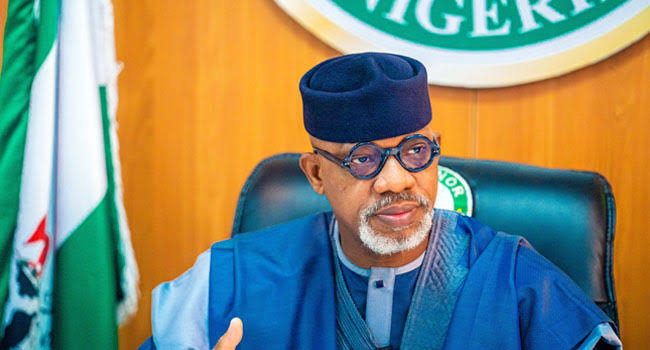
Her stellar accomplishment is not an isolated miracle, but a direct dividend of the fertile academic ecosystem cultivated in Ogun State under Governor Prince Dapo Abiodun.
Her victory stands as a compelling testament to the administration’s deep commitment to human capital development, and offers the strongest argument for his bid to represent Ogun East Senatorial District in the Nigerian Senate.

Great talent requires a supportive ecosystem to flourish, and Daniella’s record-breaking performance in Ogun illustrates how a state’s educational environment can enable young minds to reach their full potential.
Under Governor Abiodun, Ogun has not merely maintained but decisively reaffirmed its historic status as Nigeria’s premier educational hub, producing not only the overall highest scorer but also over 200 students who scored above 300 in the 2026 UTME.
This broad-based, top-to-bottom performance is far more significant than a single outlier. It demonstrates that Ogun’s learning environment provides every child — whether from Abeokuta, Ijebu-Ode, Sagamu, Ota or Ilaro — with the tools, stability, structure and motivation needed to excel nationally and compete globally.

What makes the Abiodun administration’s educational record truly remarkable is its deliberate shift away from temporary, populist fixes toward enduring institutional solutions. Governance in the education sector is often plagued by short-term interventions — distribution of exercise books, ad hoc renovations, or one-off bursaries — that disappear after a budget cycle.
Abiodun chose a different path. Through the enactment of the Ogun State Education and Skills Trust Fund, the administration established a ring-fenced, statutory fund backed by law to secure long-term, predictable investment in school infrastructure, teacher training, curriculum modernisation and vocational education.
By insulating educational funding from yearly budgetary fluctuations and political pressures, the state created a sustainable financing architecture that ensures schools are built, teachers are trained and labs are equipped whether oil prices rise or fall.
Furthermore, by prioritising science, technology, engineering and mathematics (STEM) readiness across public schools, the state helped cultivate the core scientific competencies reflected in the outstanding Physics and Chemistry scores achieved by students like Daniella. This was not accidental. It was the result of deliberate investments in science laboratories, digital learning aids and teacher upskilling in the sciences.
In doing so, Ogun has welcomed learners from all backgrounds, providing a safe, conducive, merit-driven and modern educational atmosphere where brilliance can thrive regardless of state of origin, religion or socio-economic status. Daniella, though from Ekiti, thrived in Ogun — proof that Ogun’s system rewards excellence, not indigeneity.
To understand why Ogun classrooms have become centres of national academic distinction, one must examine the comprehensive suite of policy measures instituted across the entire education value chain.
Governor Abiodun recognised early in his administration that meaningful human capital development cannot be achieved through a single intervention. It requires concurrent, coordinated investments in infrastructure, digital technology, teacher empowerment and student welfare.
First, the administration launched massive physical and technological interventions across basic and post-basic learning institutions. Under the Yellow Roof initiative — a flagship programme to standardise and modernise public schools — and continuous infrastructure rejuvenation drives, thousands of dilapidated classrooms across all 20 local government areas — from Ijebu-Ode to Sagamu, Abeokuta to Ota, Ifo to Ogun Waterside — have been completely renovated, upgraded and equipped with modern learning aids, functional furniture, perimeter fencing, water facilities and toilet amenities.
These are not cosmetic touch-ups; they are full-scale transformations that have returned dignity to public schools and restored parental confidence in them.
Recognising that contemporary education demands digital capability, the administration introduced statewide ICT integration platforms. These digital portals provide interactive learning content, past questions, video tutorials and adaptive assessments for students, while giving educators advanced tools to create lesson plans, monitor academic progress, identify learning gaps and manage classroom metrics efficiently.
This digital backbone proved particularly crucial in bridging learning losses post-COVID and in preparing students for a computer-based test like UTME.
Second, the Abiodun government has treated teachers not as peripheral workers or civil service statistics, but as the foundational pillars of societal development. This philosophical shift is evident in policy. The administration instituted regular capacity-building workshops, modern pedagogy training, subject-specific clinics and structured welfare enhancements that have significantly boosted educator morale throughout the state. Unlike previous years where training was sporadic, teachers in Ogun now undergo continuous professional development, including training on digital pedagogy, inclusive education and 21st-century classroom management.
Through competitive merit recognition schemes such as the Ogun State Best Teacher Awards, outstanding teachers and school administrators are routinely celebrated and rewarded with substantial cash prizes, housing, cars and international training opportunities.
By institutionalising teacher appreciation and ensuring prompt payment of salaries and promotions, Ogun has cultivated a highly motivated, stable and professional teaching workforce dedicated to nurturing students capable of outperforming their peers across the federation. A motivated teacher produces a motivated student, and Ogun’s UTME results prove it.
Third, the administration has systematically eliminated financial barriers to education through targeted grants and scholarship schemes that keep children in school and focused on learning. Through initiatives such as the Ogun State EduCash Grant, tens of thousands of tertiary students across public institutions — including Olabisi Onabanjo University, Tai Solarin University of Education, Ogun State Polytechnic and Federal University of Agriculture, Abeokuta — receive direct financial assistance to offset academic expenses, accommodation and research costs. This intervention has reduced dropout rates and allowed students to concentrate on their studies rather than menial survival jobs. This is complemented by expansive public-private scholarship funds — such as the multi-million naira Abiodun family scholarship funds that support hundreds of indigent but brilliant students across primary, secondary and tertiary tiers — ensuring that financial hardship never truncates an ambitious child’s academic journey. In many communities in Ogun East, parents now speak of children who would have abandoned education but for these grants.
Fourth, the administration has linked education to employability. Through the Ogun State Technical and Vocational Education Board revitalisation, vocational centres have been upgraded to teach skills in renewable energy installation, fashion, ICT, agriculture and construction. This dual-track approach ensures that even students who do not proceed to university acquire skills that make them self-reliant, while those on the academic track, like Daniella, are pushed to compete at the highest national level. The message is clear: no child is left behind.
As Nigeria faces complex economic and social challenges — from youth unemployment to brain drain to declining learning outcomes — the National Assembly requires seasoned leaders who view governance not merely as political representation, but as a strategic engine for human empowerment. Prince Dapo Abiodun’s human capital development agenda in Ogun provides a clear, tested blueprint for national impact.
Having successfully established the Education and Skills Trust Fund at state level, he brings proven executive experience to sponsor federal legislation that can ring-fence educational funding nationally, expand tertiary scholarship schemes, upgrade federal institutions and institutionalise STEM education funding across all 36 states. Such legislation would ensure that Daniella’s story is replicated in every senatorial district in Nigeria.
The people of Ogun East Senatorial District require a senator with more than rhetorical promises.
They require a senator with executive leverage, fiscal discipline, a deep network of private sector partners and a clear vision for youth empowerment.
Abiodun’s focus on human capacity ensures that youths across Ijebuland and Remo — from Ijebu-Ode to Ikenne, Sagamu to Ogun Waterside — will gain expanded access to federal opportunities, skill acquisition hubs, federal education grants and NELFUND linkages. His understanding of how to structure funds, attract counterpart funding and ensure accountability makes him ideally suited to ensure Ogun East does not just get allocations, but gets tangible results that parents and students can feel.
Daniella Jesudunsin’s victory proves that Abiodun’s policies yield concrete, verifiable, nationally recognised results.
It is not a PowerPoint achievement; it is a living, breathing 16-year-old girl who will become a doctor because she studied in a system that worked. His transition to the Red Chamber therefore offers Ogun East a representative who consistently delivers measurable progress, not excuses, and who understands that the true wealth of a nation lies in its educated youth.
The success of 16-year-old Owoeye Daniella Jesudunsin in the 2026 UTME serves as a powerful reminder of what is possible when young talent is supported by visionary, consistent and compassionate governance.
As Prince Dapo Abiodun prepares to take his record of executive delivery, institutional reform and human capital investment to the Senate, his education initiatives stand as his strongest endorsement. Championing education, empowering youth and building lasting institutions remain the hallmarks of his public service, making a vote for Dapo Abiodun an investment in a future where every young person in Ogun East — and indeed every child who schools in Ogun — can achieve excellence on the national and global stage.