

By: Femi Ogbonnikan

Nigeria is navigating a pivotal era of economic restructuring and infrastructural renewal, one that demands a fundamental recalibration of how federal ambition and state-level execution intersect.
In an economy seeking to diversify away from hydrocarbon dependence, reduce import reliance, and rebuild productive capacity, the synergy between state-level delivery and federal legislative frameworks has become an imperative cornerstone of sustainable national growth.
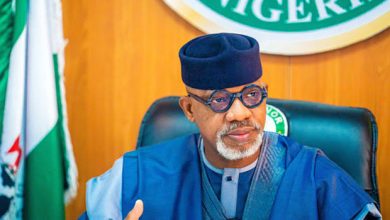
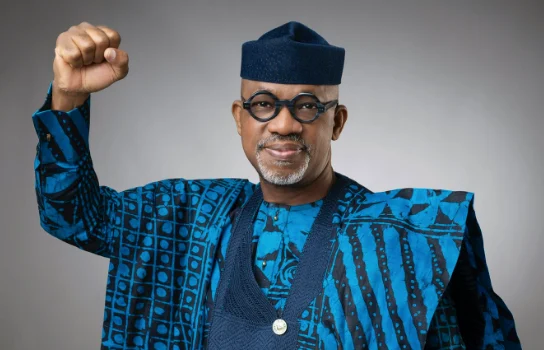
It is within this evolving political and economic landscape that the emerging consensus around Ogun State Governor, Prince Dapo Abiodun, and his senatorial ambition must be understood.

This movement represents far more than a routine political transition or the familiar post-governorship search for relevance. It is a strategic alignment designed to translate proven subnational infrastructural triumphs into durable legislative momentum within the Red Chamber of the National Assembly. Stakeholders across Ogun East, and indeed key leaders of the All Progressives Congress (APC) across the South-West, increasingly recognise a simple political truth: anchoring President Bola Ahmed Tinubu’s Renewed Hope agenda requires more than executive pronouncements from Abuja.
It requires lawmakers in the Senate who possess proven executive competence, a granular understanding of subnational logistics, and a demonstrated, verifiable track record of transforming isolated, low-productivity regions into vibrant, interconnected economic corridors.

At the heart of Governor Abiodun’s candidacy is an unprecedented infrastructural record that has fundamentally reshaped the spatial economy of Ogun State.
When he assumed office in May 2019, the administration inherited a complex and daunting landscape: neglected arterial routes linking major towns, severe rural isolation cutting off farming clusters, and acute urban transit bottlenecks exacerbated by relentless population spillover from Lagos.
Many roads were impassable in the rainy season, raising the cost of moving goods and people, stalling investment, and eroding public confidence. The deficit was not merely physical; it was economic and social, limiting access to markets, schools and hospitals.

Placing infrastructure at the core of his ISEYA development framework — Infrastructure, Social Welfare, Education, Youth Empowerment and Agriculture — Governor Abiodun initiated a statewide road revolution anchored on a principle of equitable distribution across all 20 local government areas.
This was a deliberate departure from the model of concentrating capital investments in a few select urban hubs for political visibility.
Instead, the administration democratised development, insisting that every local government, whether in the industrial border towns or the agrarian hinterlands of Imeko-Afon and Odeda, deserved tangible connectivity. This philosophy of balanced growth has become the hallmark of his administration and a template for inclusive governance.
The results have been cumulative and measurable. Over seven years into his tenure, Abiodun’s administration has constructed, reconstructed or rehabilitated more than 1,700 kilometres of roads, with an aggressive but realistic target of delivering 2,000 kilometres before completing its constitutional mandate. This is not merely a collection of road projects.
It represents an integrated economic strategy aimed at three outcomes: connecting agricultural belts directly to urban consumer centres, reducing vehicle operating costs and travel times for commuters and logistics operators, and safeguarding public safety through better drainage, street lighting and road furniture.
In agricultural regions, particularly across the Yewa belt in Ogun West and parts of Ogun East and Central, inadequate road infrastructure had historically stifled economic growth.
Farming communities were isolated, post-harvest losses were routinely as high as 40 percent for perishables, and access to inputs like fertiliser and improved seedlings was constrained by poor access. Abiodun’s road programme targeted these systemic bottlenecks with surgical precision.
The reconstruction of the Ilaro-Owode Road, for instance, coupled with the completion of the critical Odo-Afa and Afon bridges along the Imeko-Afon axis, reopened vital farming corridors that had been disconnected for over a decade. Farmers who once spent hours navigating gullies to get to markets in Ilaro, Owode or across the border now have all-season access.
Interventions such as the General Hospital-Aferiku Road and Oke Erinja-Erinja Road Phase 2 went beyond commerce; they restored direct access to primary healthcare, quality schooling and commercial markets for rural households, linking social welfare to physical infrastructure. These roads have restored dignity and opportunity to communities that felt abandoned.
By drastically lowering transport tariffs — in some corridors by over 50 percent — and ensuring produce reaches consumer markets within hours rather than days, the administration transformed farming from a subsistence struggle into a commercially viable enterprise. This directly aids national food security goals, reduces pressure on food inflation in Lagos and Ogun markets, and demonstrates the profound social impact of strategic civil engineering.
It is a practical model of how a governor can use asphalt to fight hunger, create wealth and stem rural-urban migration.
Ogun State’s unique position as Nigeria’s primary industrial gateway to Lagos presents distinct demographic and logistical opportunities and challenges.
The state is home to Nigeria’s largest concentration of manufacturing firms, yet it also absorbs a huge share of Lagos’s residential overflow. Rapid urban sprawl in border communities — Mowe, Ibafo, Magboro, Arepo, Akute, Ajuwon, Alagbole, Ijoko, Sango-Ota — created immense pressure on local roads, public transport and drainage systems. For years, residents spent four to six hours daily commuting, with attendant productivity losses.
By systematically executing projects such as the Mowe-Ofada Road, the Siun-Owode corridor, the Denro-Ishashi-Akute Road and the long-demanded Alagbole-Ajuwon-Akute network, the Abiodun administration turned notorious commuter bottlenecks into well-connected suburban residential and commercial centres. These road networks now absorb population growth, enhance property values — with appreciable increases in rental and capital values along rehabilitated corridors — and reduce daily commuting stress for hundreds of thousands who traverse the Lagos-Ogun economic divide. In effect, the administration has merged subnational governance with regional economic integration, building a functional Lagos-Ogun megacity corridor through deliberate infrastructure policy and inter-state cooperation.
Beyond rural integration and urban transit management, Abiodun’s infrastructure policy is explicitly designed to support manufacturing and industrialisation — the core of any meaningful diversification agenda.
Ogun State hosts over 400 large-scale manufacturing concerns and numerous industrial estates, requiring resilient logistics channels to transport raw materials and finished goods to regional and international markets. Without good roads, factories cannot function efficiently.
The transformation of key manufacturing axes demonstrates how state policy can directly amplify federal economic priorities.
The reconstruction of the Ota-Abeokuta Road, a 70-kilometre economic lifeline abandoned for years, restored vital connectivity between the state capital and the industrial heartland of Ado-Odo/Ota, Nigeria’s industrial capital. Targeted rehabilitations along the Lusada-Alapoti Road, Atan-Lusada-Agbara Road and adjoining industrial links reduced heavy-vehicle turnaround times from days to hours, safeguarding billions of naira in private manufacturing investment within the Agbara-Ota industrial zone and improving ease of doing business. Investors now have confidence that their goods can move.
Furthermore, this expansive road network does not exist in isolation. It connects directly with key catalytic assets that define the Abiodun administration’s industrial vision: the Gateway International Airport in Iperu-Ilishan, which is already attracting agro-export logistics and positioning Ogun in the global perishable cargo market; the planned Gateway Deep Sea Port and the Blue Marine Economic Zone in Ogun Waterside; and the Special Agro-Industrial Processing Zones. Together, they lay the groundwork for integrated sea, air and land logistics, positioning Ogun as a complete value-chain state ready for AfCFTA competitiveness.
This subnational execution deliberately mirrors President Bola Ahmed Tinubu’s vision of national economic revival. From expanding Special Agro-Processing Zones to linking state highways with transformative federal projects like the Lagos-Calabar Coastal Highway and Lagos-Ibadan Expressway, Abiodun’s approach provides a practical, tested model for federal-state harmonisation. It shows what is possible when a state aligns its capital budget with the federal government’s growth corridors and prioritises continuity over political discontinuity.
It is precisely this alignment that makes the transition of a two-term governor to the Senate a distinct institutional advantage for Nigeria.
With deep, hands-on experience in public-private partnerships, infrastructure finance, intergovernmental negotiations and actual project delivery — including managing contractors, right-of-way issues and community engagement — an outgoing chief executive is uniquely positioned to advance legislative reforms that reflect subnational realities, not just Abuja theories. He understands the difference between appropriation and cash-backing, between policy design and field implementation.
In the Senate, Abiodun can champion laws that matter to real economic operators: establishing dedicated federal road infrastructure funds that guarantee maintenance beyond construction, providing tax incentives and infrastructure grants for industrial clusters, creating legal frameworks for state-federal tolling and road concessions, and ensuring federal capital allocations directly support high-impact economic corridors rather than being spread thinly for political patronage. His presence would strengthen legislative oversight with executive insight.
The transition from state executive leadership to the Red Chamber allows Prince Dapo Abiodun to bring real-world governance experience to national lawmaking at a time when the Senate’s effectiveness relies heavily on leadership with direct experience in budget execution, intergovernmental affairs and capital project delivery.
His legislative agenda will focus on three clear pillars: first, unlocking federal resources to convert state-rehabilitated corridors into permanently maintained national trade routes; second, advocating for industrial subsidies, power sector reforms and infrastructure grants for manufacturing hubs like Ota, Agbara, Sagamu and Ijebu-Ode; and third, ensuring the South-West retains seasoned, executive leadership within key Senate committees such as Works, Industry, Marine and Blue Economy, and Appropriations.
Ultimately, Abiodun’s senatorial ambition represents a logical next step in a career focused on public infrastructure and economic expansion. By connecting isolated communities, building industrial corridors, stabilising border towns and aligning state infrastructure with President Tinubu’s national economic plan, Abiodun has demonstrated how targeted, equitable governance can unlock subnational potential and drive inclusive growth.
His election to the Senate will bring a tested, execution-focused, private-sector-friendly perspective to national legislative strategy — ensuring that Ogun State remains central to Nigeria’s industrial transformation and that subnational road achievements are matched, protected and scaled by federal legislative support for generations to come.
Ogbonnikan is a Senior Special Assistant (SSA) to the Ogun State Governor on Media