

By: Femi Ogbonnikan
The worsening security situation across Nigeria has made the debate over the establishment of state police increasingly urgent.

From the persistent menace of banditry and kidnapping to terrorism, communal conflicts, armed robbery and other violent crimes, the country is confronted with security challenges that have exposed the limitations of the existing centralised policing structure.

The growing frequency and geographical spread of these threats have strengthened the argument that the search for a more effective security architecture must include decentralisation of policing.
For Ogun State, the prospect of having its own police force is not merely an endorsement of a constitutional reform whose time appears to have come. It is also an opportunity to consolidate years of investment in community-based security and build an institution better equipped to respond to the peculiar security challenges of the state.

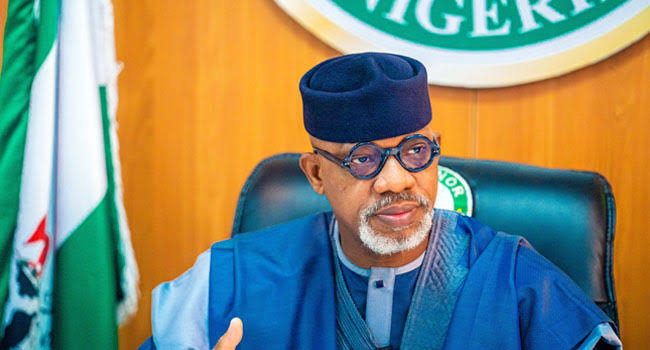
With more than 6,000 personnel drawn from the Ogun State Security Network, popularly known as Amotekun, and the So-Safe Corps, Governor Dapo Abiodun believes the state is well-positioned to take advantage of the emerging framework for state policing.

His declaration that Ogun is ready for its own police command is significant, particularly against the background of the worsening national security situation and the growing recognition that the Nigeria Police Force (NPF), despite its critical role, cannot effectively address the country’s security challenges without stronger local participation and institutional support.
Abiodun made this disclosure at the weekend during the 50th anniversary celebration of Ereke Day in Ikenne, Ikenne Local Government Area. He described the approval of state police by the Ogun State House of Assembly as a major milestone in the state’s determination to strengthen its security architecture.
The governor’s announcement that Amotekun and So-Safe Corps have a combined workforce of more than 6,000 personnel provides a glimpse into the practical advantage Ogun could enjoy when the proposed police structure becomes operational.
“I am the Chairman of the Governors’ Forum on State Police Creation and the representative of the President in the Governors’ Forum on State Police Creation.
I am proud to announce that the Ogun State House of Assembly has approved the creation of State Police.
“Between Amotekun and So-Safe Corps, we have over 6,000 personnel. We are ready for the Ogun State Police Command, and that will make the difference in protecting the lives and property of our people,” he said.
The significance of this declaration goes beyond the numerical strength of the existing security outfits. It points to a state government that has recognised the limitations of depending exclusively on the centralised policing system and has taken preliminary steps towards developing a security arrangement that responds more directly to local realities.
Indeed, one of the strongest arguments for state police is that Nigeria’s security challenges have become too complex, widespread and locally differentiated to be addressed effectively through a policing structure that is largely controlled from the centre.
Each region of the country has its peculiar security challenges. The circumstances confronting communities in the North-East, North-West, North-Central, South-East and South-West are not identical.
Even within individual states, security threats differ from one local government area to another. While some communities are battling terrorism and insurgency, others are struggling with banditry, kidnapping, farmers-herders conflicts, communal violence, cultism, trafficking and organised criminal networks.
A policing structure that understands the peculiarities of these communities and operates closer to them could significantly improve intelligence gathering, crime prevention and emergency response.
This is where state police becomes particularly relevant.
The conventional policing system has long struggled with the enormous responsibility of maintaining law and order across Nigeria’s 36 states and the Federal Capital Territory.
The demands on its personnel are enormous, considering the country’s population, geographical spread and the increasing sophistication of criminal networks.
The problem is not necessarily a lack of commitment on the part of police officers. Rather, it reflects the structural limitations of a centralised institution expected to respond to security threats across a vast and diverse country.
In many instances, the distance between operational command structures and the communities where crimes occur can affect the speed of response, intelligence coordination and deployment of personnel.
State police offers an opportunity to address some of these limitations by creating additional policing capacity at the subnational level. It would enable state governments to develop security strategies based on local intelligence, community needs and emerging threats, while maintaining operational collaboration with the federal police.
The importance of this reform becomes more apparent in the face of the persistent kidnapping epidemic. Across several parts of the country, criminals have turned the abduction of residents, travellers, students and other vulnerable persons into a lucrative enterprise. In many rural communities, the fear of attacks has disrupted farming, commercial activities and social life. Families are forced to make difficult decisions about movement, while some farmers abandon their farmlands for fear of being kidnapped or killed. Such a situation requires a policing system that can establish a strong presence in vulnerable communities, develop relationships with residents and identify criminal activities before they escalate. State police could provide the additional manpower and local intelligence needed to achieve this objective.
The same applies to the challenge of banditry and terrorism. Although the military remains indispensable in confronting armed insurgent groups and heavily equipped criminal organisations, the long-term management of internal security requires effective policing. Military operations may dislodge criminal groups from their strongholds, but maintaining law and order, investigating crimes, gathering intelligence and protecting communities require a functional police system.
A well-structured state police command could therefore complement the efforts of the military and federal police by providing sustained local security presence and ensuring that communities are not left vulnerable after security operations.
For Ogun, this consideration is particularly important. Its strategic location, sharing boundaries with Lagos State and the Republic of Benin, makes it an important economic and commercial corridor.
The state is home to industrial establishments, manufacturing companies, agricultural communities, border settlements and rapidly expanding urban centres.
These features create enormous economic opportunities but also present complex security challenges. From the industrial corridors of Agbara, Ota and Sagamu to agricultural settlements and border communities in other parts of the state, effective security is indispensable to economic productivity.
The movement of goods, people and industrial raw materials across the state requires a secure environment. The same applies to the growing investment opportunities associated with Ogun’s industrial expansion and infrastructure development.
Its proximity to Lagos, Nigeria’s commercial nerve centre, and its international boundary with the Republic of Benin also demand a security arrangement capable of addressing cross-border criminal activities, trafficking, smuggling, organised theft and other emerging threats.
A state police structure, if properly designed and professionally managed, could improve the ability of security agencies to identify and address these threats. It would also provide an opportunity to strengthen cooperation between local communities and law enforcement authorities. This is where the existing experience of Amotekun and So-Safe Corps becomes particularly relevant. Their personnel have already been deployed in different communities and have acquired familiarity with local security conditions. Their experience could provide a useful foundation for recruitment, training and operational planning under the proposed state police arrangement.
Rather than beginning the process of building a security workforce from the scratch, Ogun has an existing pool of personnel whose operational experience could be harnessed in developing the new institution. Their knowledge of local terrain, community relationships and security dynamics could be particularly valuable in intelligence gathering and preventive policing.
The establishment of Amotekun and So-Safe Corps also demonstrates that the state has not waited for the completion of the constitutional process before taking steps to strengthen its security architecture. These outfits were conceived to complement conventional security agencies and provide additional support in addressing threats within their areas of operation.
Their existence, however, should be seen as a foundation rather than a substitute for the professional standards expected of a full-fledged police institution.
The transition to state police must involve comprehensive training, proper vetting, clear operational procedures and an effective command structure. This is particularly important because the arguments against state police are not without merit. The fear that governors could deploy state police to intimidate political opponents, suppress dissent or manipulate electoral processes remains one of the most frequently expressed concerns about the reform. Such apprehensions cannot be dismissed, especially in a political environment where the temptation to use state institutions for partisan purposes sometimes arises.
The credibility of state policing will therefore depend on the strength of the constitutional safeguards, institutional independence and accountability mechanisms put in place.
For Ogun, the proposed police force must be an institution for all residents, irrespective of political affiliation, ethnic background, religious beliefs or social standing. Its primary responsibility must be the protection of lives and property, not the protection of political interests. There must also be a clear distinction between the responsibilities of the state police and those of the Nigeria Police Force. Effective coordination is essential to prevent jurisdictional conflicts, duplication of duties and unnecessary rivalry between the two institutions. Criminal investigations, intelligence sharing, interstate operations and other areas of overlapping responsibilities will require clearly defined protocols.
Funding is another critical consideration. The availability of more than 6,000 personnel provides a useful starting point, but maintaining a functional police command will require substantial and sustained financial commitments. Personnel must be properly remunerated, equipped, trained and provided with the necessary logistical support to perform their duties.
The state will also need to invest in communication infrastructure, intelligence systems, patrol vehicles, forensic capabilities and modern crime-detection technology. Without these essentials, the proposed force could become another layer of security bureaucracy rather than the effective institution envisaged by its promoters.
There is equally the need to establish independent oversight mechanisms to investigate allegations of misconduct, unlawful detention, abuse of power and human rights violations.
The public must have confidence that state police officers will be accountable for their actions and that complaints against them will receive impartial attention. Abiodun’s position as Chairman of the Nigeria Governors’ Forum Committee on State Police Creation and his representation of President Bola Tinubu in the governors’ forum also place him in a strategic position to contribute to the national implementation process. His involvement provides Ogun with an opportunity to align its preparations with the broader policy direction of the federal government and other states.
It also places an additional responsibility on him to demonstrate that the transition from the existing security arrangements to state policing can be achieved without compromising professionalism, constitutional order and public confidence. The state government’s emphasis on security as a foundation for economic development is equally noteworthy.
Abiodun has consistently maintained that no meaningful development can take place in an atmosphere of insecurity. This understanding is reflected in the administration’s broader infrastructure and economic development agenda. The governor’s disclosure that his administration has constructed and rehabilitated more than 1,700 kilometres of roads across Ogun State, including over 40 roads in Remoland, illustrates the connection between infrastructure and security.
Improved road networks make communities more accessible, facilitate commercial activities and can enhance the mobility of security personnel responding to emergencies. His directive for the immediate reconstruction of the Delabo-Ikenne Road during the Ereke Day celebration further underscores the importance of connecting communities to economic and social opportunities.
Nevertheless, infrastructure development and security reform must complement each other. Roads can open up communities, but effective policing is necessary to ensure that criminals do not exploit improved connectivity.
Similarly, industrial investments, commercial expansion and agricultural productivity require a secure environment to thrive. The governor’s appeal to young people in Ikenne to reject political violence ahead of the 2027 general elections also touches on an important dimension of the state police debate. A state police institution must not become an instrument of political intimidation or electoral manipulation. Its credibility will depend on its ability to protect every citizen and enforce the law impartially.
Ultimately, the readiness of Ogun State for state police should be measured not only by its existing manpower but also by the strength of the institutions, safeguards and resources it is prepared to commit to the project. The availability of more than 6,000 Amotekun and So-Safe personnel gives the state a considerable head start. It reduces the challenge of building an entirely new security workforce and provides an existing operational foundation upon which a professional state police command could be developed.
More importantly, Ogun’s preparations are taking place at a time when the country can no longer afford to treat security reform as an endless subject of political debate. The escalating security situation demands fresh thinking, additional operational capacity and a policing system that can respond more effectively to the realities of individual communities.
State police is not a magic solution to all Nigeria’s security problems. It will not, by itself, eliminate terrorism, banditry or kidnapping. But properly established, adequately funded and effectively supervised, it could become a critical component of a more responsive national security architecture.
For Ogun, the challenge is to convert its existing manpower advantage into a professional, intelligence-driven and accountable institution. If the Abiodun administration succeeds in doing so, the state could emerge as one of the better-prepared states to demonstrate how decentralised policing can improve public safety, protect investments and strengthen community confidence in government. At a time when insecurity threatens livelihoods, economic activities and the very foundations of national development, the case for bringing policing closer to the people has become compelling. Ogun’s existing security structures and the political commitment demonstrated by its governor provide a promising starting point. The ultimate test, however, will be whether this preparedness can translate into a safer state and a policing institution that earns the trust of the people it is established to protect.
Ogbonnikan is a Senior Special Assistant (SSA) to the Ogun State Governor on Media